AI / ML · 2024
LMBiS-Net
An implementation of Abbasi et al.'s “LMBiS-Net: A Lightweight Multipath Bidirectional Skip Connection based CNN for Retinal Blood Vessel Segmentation.”
Project Goal
To implement the LMBiS-Net model and confirm the findings presented in the original paper. Additionally, we aimed to apply our implementation to a different dataset that was not used in the paper.
Why It Matters
LMBiS-Net's primary benefit is an accurate retinal blood-vessel segmentation model that is computationally efficient compared to state-of-the-art models. This efficiency can assist ophthalmologists in the early detection and treatment of retinal diseases, reducing manual effort and potential human error.
Retinal diseases are a major cause of visual impairment and blindness — studies show that 5%–20% of the global population aged 40+ has retinal disorders. Examining retinal vessels provides critical insight into the underlying conditions that contribute to these diseases.
See it segment
Drag across the retina to reveal what the network traced — every vessel it found in a raw CHASE_DB1 fundus photograph. Then switch to the expert's hand-labeled ground truth to see how close it got.
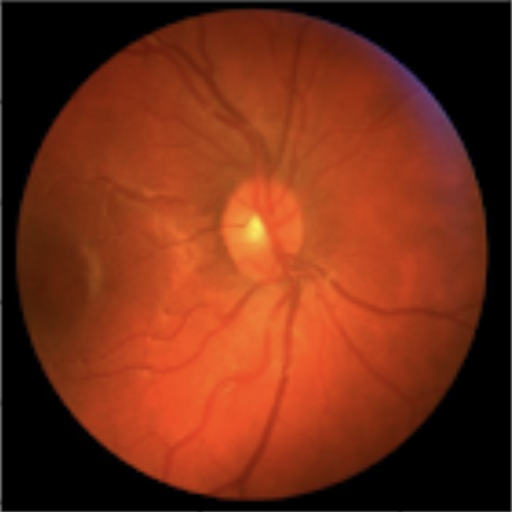

A held-out CHASE_DB1 image — the model's own output, overlaid on the source photograph. Cyan is the network's prediction; violet is the expert label.
The Model
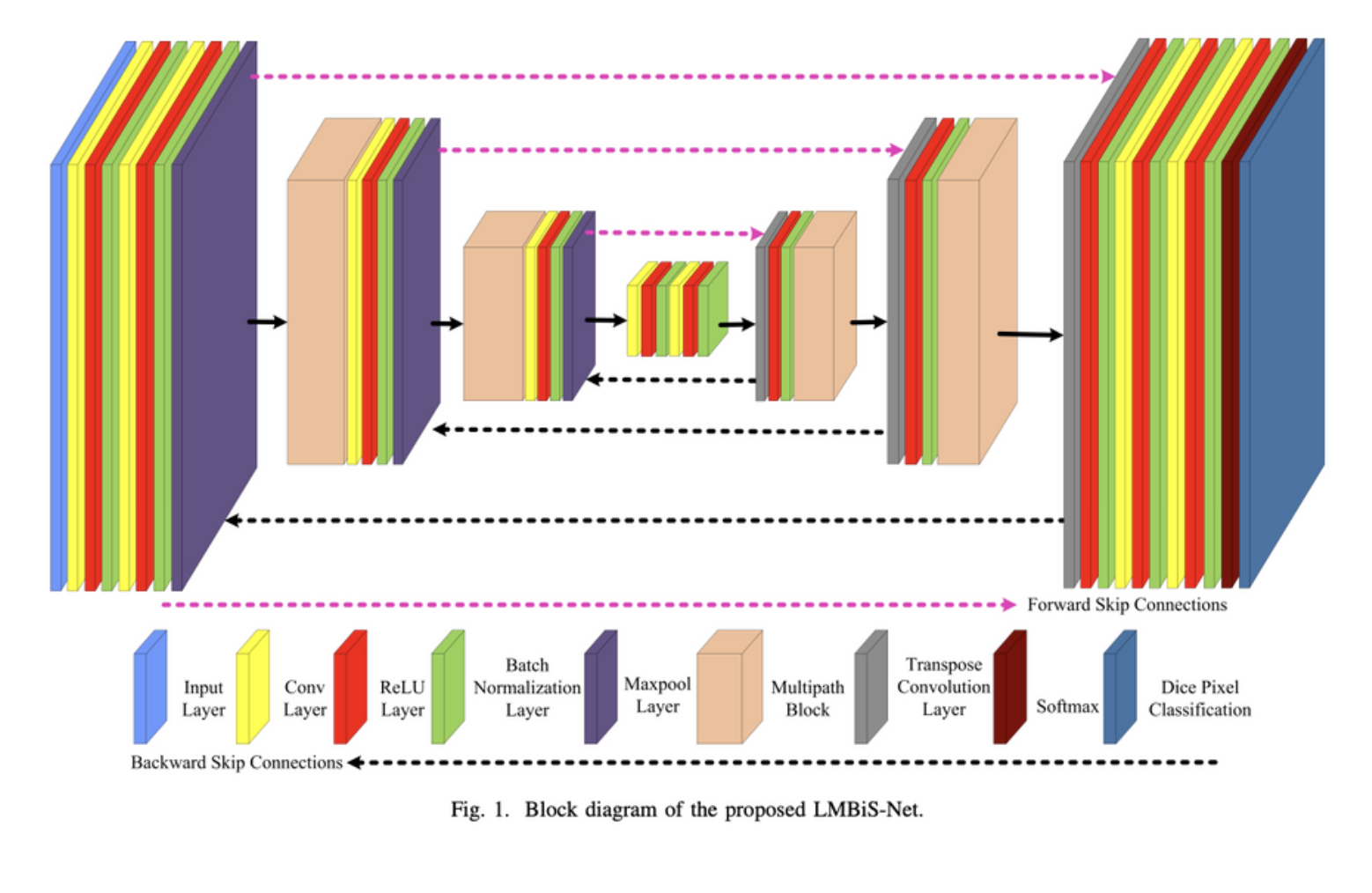
LMBiS-Net is a CNN consisting of three encoder blocks, a bottleneck layer, and three decoder blocks. It uses multipath feature-extraction blocks and bidirectional skip connections to enhance information flow between the encoders and decoders.
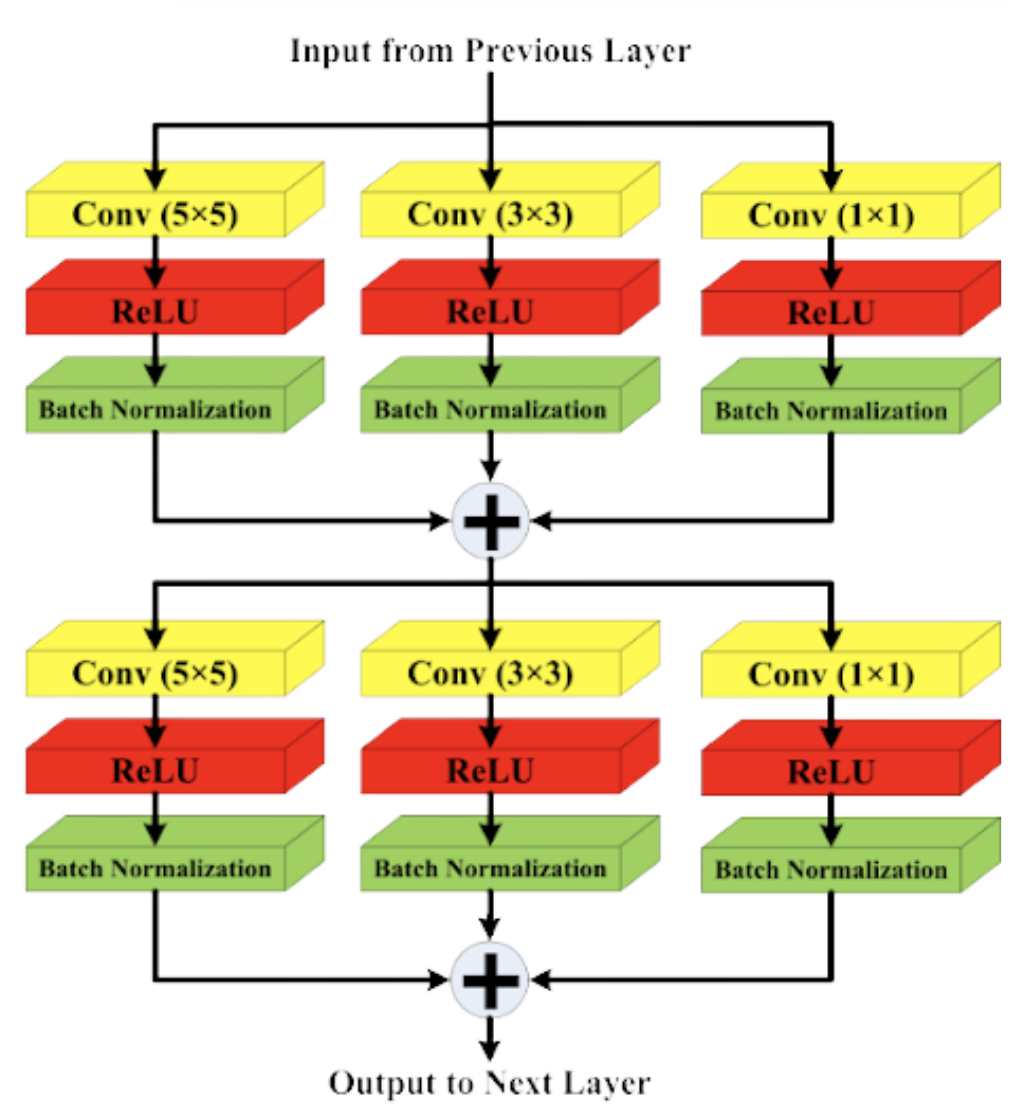
Multi-Path Feature Extraction
This component introduces feature diversity into the model, reducing overfitting and improving generalization. By using different-sized convolutions, the network captures both low-level and high-level features crucial for blood-vessel segmentation.
Our Contribution
We created the first publicly available implementation of LMBiS-Net and developed code to augment retinal images, increasing the size of training datasets. Our findings support the original paper's claims that LMBiS-Net is a computationally efficient and accurate state-of-the-art model for retinal blood-vessel segmentation.
Benchmark — CHASE_DB1
Our from-scratch implementation, measured against the figures reported in the original paper. We reproduced its segmentation quality — and edged past it on sensitivity, the rate of true vessels caught.